


Savasana or Corpse Pose (not just for Halloween...) - The Yoga of Endings & Beginnings

As the days grow shorter and shadows lengthen, we enter the threshold time of year celebrating Halloween (or Samhain in the Celtic tradition - the ancient fire festival marking the end of summer and the beginning of winter).
It’s a moment suspended between worlds - a sacred pause between harvest and winter, light and dark, life and death. Traditionally, Samhain was seen as a time of transition and transformation, when the veil between the seen and unseen thins, inviting reflection, release, and renewal.
In many ways, this turning of the seasons mirrors what we experience in Savasana, the 'Corpse Pose.' It, too, is a practice of endings and beginnings - a symbolic 'death' and quiet 'rebirth', reminding us of the cyclical nature of all things.
Even if you have never done any Yoga, you may have heard the by now famous saying: 'I'm only here for Savasana'... At the end of a yoga practice, we lie down on our backs, eyes closed, limbs relaxed, breath soft. From the outside, it may look like rest - but Savasana is much more than lying still. In Sanskrit, 'Sava' means corpse and “Asana” means pose. It symbolizes complete surrender - a conscious pause where we allow the effects of our practice to settle and integrate.
Savasana (Corpse Pose) is the bridge between movement and stillness, effort and ease, doing and being. It’s a time for the body and mind to absorb the benefits of the entire practice - physically, energetically, and mentally.
When we rest in Savasana:
The nervous system shifts from 'fight or flight' to 'rest and digest.'
Muscles and joints release residual tension, aiding recovery.
The heart rate and breath slow down, inviting deep relaxation.
The mind learns to settle, creating space for clarity and peace.

It’s also a practice in awareness and presence. In our busy world, stillness can feel uncomfortable, even vulnerable. Yet by lying down and releasing control, we practice trust - in ourselves, in the moment, and in life’s constant flow of change.
So what do you actually DO in Savasana? Well for being done so often and sometimes for an indulgent long time, paradoxically, the art of Savasana is about doing less - but it’s not about drifting off to sleep or letting the mind run wild. The aim is to remain awake yet effortless, fully present yet deeply relaxed.
Here’s how to approach it:
Soften the body from head to toe, scanning gently for any places still holding tension.
Anchor your awareness in the rhythm of your breath. Let each exhale feel like a soft release, each inhale a quiet renewal.
Allow thoughts to arise and pass without attaching to them - like clouds moving across an open blue sky.
Rest in awareness itself - that quiet inner space that observes without judgment.
In this surrender, the boundaries between body, breath, and consciousness begin to dissolve. You may feel weightless, spacious, or even timeless. This is the deeper gift of Savasana - touching the stillness that exists beneath all the movement of life.
I'm the first one to admit that like many other people, I'm not always great with change. But Yoga reminds us that all things change - it's in fact the only constant. Breath by breath, moment by moment, we are always arriving and departing.In Savasana, we practice embracing impermanence - resting peacefully in the truth that endings and beginnings are simply different parts of the same cycle.
Just as Samhain marks the turning of the wheel from light to dark, Savasana asks us to trust in the unseen - to let go of what was, so that something new can emerge. It’s a rehearsal for all of life’s transitions: graceful, grounded, aware.
By softening into this awareness, we learn to navigate change with more ease - trusting that every ending holds the seed of a new beginning.
Savasana teaches us the art of letting go. It mirrors life’s cycles: creation, transformation, dissolution. It represents a symbolic death - not a morbid one, but a death of ego and striving. Through stillness, we experience renewal - the quiet rebirth of clarity, peace, and connection.
In the same way Samhain honors endings - the last harvest, the close of the growing season - Savasana invites us to honor completion before turning toward what’s next. Both teach us that endings aren't final; it’s transformation, a natural turning of the wheel (and that includes very real everyday things like moving home, starting a new job, changing a pattern or behaviour...)
There’s no single way to rest in stillness - it’s about finding what supports your body and spirit best.
Classic Savasana: Lie flat on your back, legs extended, arms at your sides, palms up. Allow your body to sink into the earth.

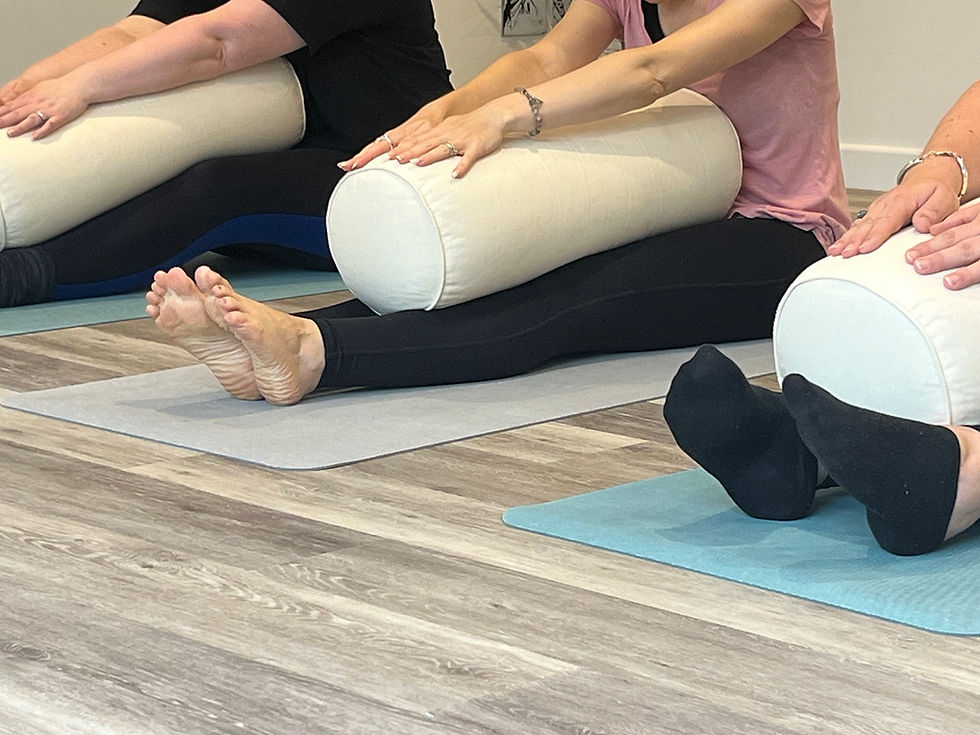
Supported Savasana: Place a bolster under your knees, a folded blanket beneath your head, and another over your body for warmth and grounding.

Reclined Bound Angle (Supta Baddha Konasana): Bring soles of feet together, knees open and supported, one hand on heart and one on belly — a nurturing variation for emotional release.

Weighted Savasana: Add a sandbag or folded blanket over your hips or chest to deepen grounding and comfort.

Savasana is a quiet celebration of impermanence - a sacred pause between what was and what’s becoming. As you lie still, feel the earth cradle you. Let go of what no longer serves, and open to the gentle rhythm of renewal that lives within you.
This Halloween and Samhain, as the world honors the space between light and dark, life and death, let Savasana be your reminder:
In surrender, there is strength.
In stillness, there is wisdom.
In endings, there is always a beginning.


Comments